IMPORTANT NOTICE ABOUT COMMENTS

COMMENTS HAVE BEEN DISABLED

Because of spam, I personally moderate all comments left on my blog. However, because of health issues, I will not be able to do so in the future.

If you have a personal question about LI or any related topic you can send me an email at stevecarper@cs.com. I will try to respond.

Otherwise, this blog is now a legacy site, meaning that I am not updating it any longer. The basic information about LI is still sound. However, product information and weblinks may be out of date.

In addition, my old website, Planet Lactose, has been taken down because of the age of the information. Unfortunately, that means links to the site on this blog will no longer work.

For quick offline reference, you can purchase Planet Lactose: The Best of the Blog as an ebook on Amazon.com or BarnesandNoble.com. Almost 100,000 words on LI, allergies, milk products, milk-free products, and the genetics of intolerance, along with large helpings of the weirdness that is the Net.

Sunday, November 05, 2006

It's After Halloween So Time for Christmas Nondairy

The stores are already bulging with Christmas decorations and last year's leftover wrapping paper on sale. So it's time to bring out the Christmas-themed food. I guess you can have it at Thanksgiving, too. That leaves you all of December to get tired of it.

Ah, enough cynicism of the season.

Vitasoy put two new flavors into the national marketplace in October, which I just saw in a store for the first time.
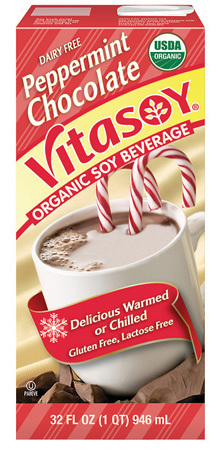
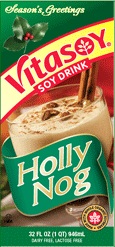


Or as their press release put it:

Vitasoy USA Inc. has introduced two organic soy drinks in rich flavors to provide consumers beverage options that taste decadent, yet are guilt free. Holly Nog and Peppermint Chocolate Soy Drinks are lactose free, gluten free, contain no cholesterol and just a fraction of the fat of dairy eggnog. But that doesn’t mean they are light on flavor. Lightly spiced, Holly Nog is a creamy, smooth drink with aromas of cinnamon and nutmeg. Peppermint Chocolate is excellent served warm or chilled, combining the luscious sweetness of premium chocolate with the cool lingering refreshment of mint.

Yet these non-dairy beverages barely budge the calorie counter – Holly Nog is just 120 calories per 8-ounce serving, and Peppermint Chocolate 140 calories per 8-ounce serving – versus more than 340 calories per 8-ounce serving for dairy eggnog. Made from 100% organic whole soybeans, these beverages are rich in soy isoflavones and contain 4 grams of soy protein per serving.


Vitasoy’s new organic beverages are targeted to health-conscious consumers, as well as to those who are lactose intolerant or vegan – and those who just find the richness of high-fat beverages overwhelming. Vitasoy New Product Manager Jayne Minigell explains: “Holly Nog was distributed on a limited basis in 2005, and received excellent feedback. Consumers liked the lightness and creamy consistency, and gave us high marks on flavor. They appreciated being able to serve a festive and delicious beverage when entertaining lactose-intolerant relatives and friends. To build on that success, we’ve added Peppermint Chocolate – another premium alternative with extended appeal from fall right through winter.”


Holly Nog and Peppermint Chocolate Organic Soy Drinks were developed to allow retailers to capitalize on the long winter selling season with traditional flavors reformulated for demanding consumers. Healthy ingredients and minimal fat and calories encourage consumers to enjoy these beverages on more than an occasional basis. Aseptic packaging in bright colors makes them easy to merchandise in visible, high-traffic areas to maximize sales and profits.


Vitasoy USA Inc., headquartered in Ayer, Massachusetts, has created delicious, nutritious, organic and all-natural foods to help families improve their health for more than 25 years. Vitasoy USA Inc. produces premium tofu, soymilk and vegan salad dressings that are USDA Certified Organic, as well as all-natural, restaurant-style stir-fry sauces, weight-management meal replacement beverages, and Asian pastas, teas and juices. These healthy and delicious products are sold under the brand names Vitasoy®, Nasoya®, Azumaya®, Vita® and San Sui®. Vitasoy USA Inc. is a wholly owned subsidiary of Vitasoy International Holdings Limited of Hong Kong, a world leader in soy products for more than 65 years. Visit www.vitasoy-usa.com for more product information and recipe suggestions.


I've seen nondairy Nog around in limited quantities for years. Maybe this year is the one in which it breaks out in the mainsteam. I'll keep you posted.

Bookmark and Share

Saturday, November 04, 2006

Organic Meadow Certified Organic Lactose Free 2% Milk

Is this the first organic lactose free milk in Canada?

I don't know, but the press release claims it is.

You can find the full text of the release here.

For the first time in Canada, 3.5 million Canadians suffering from the symptoms of lactose intolerance will be able to enjoy the wholesome goodness of organic milk. Organic Meadow, Canada's leading, certified organic dairy, is now offering Certified Organic Lactose Free 2% Milk through major grocery chains and specialty food stores across Canada.

For years, health conscious consumers have recognized the benefits of organic milk as part of a well balanced diet. But for many people affected by lactose intolerance, enjoying a cold glass of organic milk with a meal, or simply on its own, was not possible. People with lactose intolerance cannot digest the natural sugar lactose. They suffer a range of symptoms including pain, gas and bloating, because their system can't perform the necessary function of converting lactose to glucose and galactose. The condition affects an estimated 25% of Canadians and can be as minor as discomfort and as major as contributing to chronic illness. Sufferers of lactose intolerance frequently have to eliminate all dairy products from their diets. With the release of Organic Meadow's lactose-free milk, these people can re-introduce organic milk to their lives.

...

Organic Meadow's lactose free 2% organic milk is sold in 1 and 2 litre cartons and has the same nutritional value as its regular 2% milk. To locate a store near you, visit the Organic Meadow website at www.organicmeadow.com.


One slight problem, though. Maybe not so slight.

"People often refer to organic dairy products as having the taste they remember from childhood. " said Ted Zettel, President, Organic Meadow. "We think that's because Organic dairy cattle live healthier lives; they are fed only organic feeds, are treated homeopathically on the rare occasion of illness and spend a lot of time outdoors."


Treated homeopathically is the same as not being treated at all. Homeopathy is sheer quackery (or moo-ery). I have to hope that the Canadian government requires health inspections and real veterinarians to treat the cows with real medicines. Fortunately, this is not raw milk but regular milk that has been Ultra High Temperature (UHT) pasteurized so it will be safe on the shelf.

Bookmark and Share

Tuesday, October 31, 2006

Halloween Horror! Lactose Bacteria Mutating in Your Colon!

The bacteria that eat the undigested lactose that the reaches the colon are a special breed, so to speak. And that helps explain why a colony of good bacteria - the type that digests lactose - or a colony of bad bacteria - the type that ferments lactose - can take hold so quickly.

Anneli Waara writes about this is an article called "Mass copying of genes speeds up evolution" on Innovations.Report.de.

The research should be found in the latest issue of PNAS, Proceedings of the National Academy of Sciences, but I didn't see the proper article there. I'll try to find it for you and edit it in.

Waara said:

“When the bacterium’s gene for making use of lactose is inefficient, that is, when the bacterium has an ineffective enzyme for breaking down lactose, mutant bacteria are favored instead, with up to a hundred-fold rise in the number of copies of the gene,” says Professor Dan Andersson, one of those behind the study.

This has two consequences: on the one hand, the bacterium manages to grow on lactose because the amount of the inefficient enzyme increases and, on the other hand, the chances increase that the bacterium will develop a mutation in one of these 100 identical genes leading to an improvement in the enzyme function. The scientists also show that amplification proceeds stepwise: first, a large region is duplicated and then smaller regions within that region are amplified to high numbers of copies. According to Dan Andersson, it is probably much more common than was previously thought, which is extremely exciting.

“And they are important, since this means that evolutionary changes can take place at a considerably higher speed. One reason the extent of this has been underestimated is their inherent instability, which makes them difficult to study in laboratory experiments.”


They're evolving right before our eyes, er, below our eyes. Somewhat out of sight of our eyes, to be precise. But they just might solve puzzles about changes in other genes. It's not just gas, then; it's progress.

Bookmark and Share

Friday, October 27, 2006

Allergen-Free Halloween Treats

Cybele Pascal from lime.com sent me a link to these dairy-free, soy-free, egg-free, peanut-free, tree nut-free, wheat-free, and gluten-free recipes.

Go to: Allergen-Free Halloween Treats.

You'll see recipes for Chocolate Sunflower Butter Cups and Old-Fashioned Popcorn Balls. (The sunflower butter is the same kind of nondairy butter that I talked about in Shea Butter and Other Nondairy Foolers.)

And of course poke around the site for the many other recipe, food, and health pages.

Bookmark and Share

Dairy Market for Kids Increasing

The market for kid's foods is estimated to be more than $300 billion worldwide. That's approximately 300 billion times as much as I make for this blog. More, actually.

So it's not surprising that the dairy industry thinks that it sees opportunities. A report, Eight Key Case Studies In Kids Nutritional Dairy, authored by Julian Mellentin, director of the Centre for Food & Health Studies, outlines the consumer markets key health concerns and how companies can address them effectively.

According to an article on NutraIngredients.com:

"The dairy industry's ambition to innovate with more and more new ingredients seems to be growing increasingly bolder," said Mellentin. "No other food or beverage category has played such an important role in driving the functional food revolution in Europe, South America and Asia."

Mellentin claims that probiotics, omega-3s and calcium are the three areas in which "the most significant success stories are being made."


This all gets back to the functional foods trend that's sweeping Europe and beginning to take hold in the U.S.

Even better, more and more dairy products are being introduced with lower fat:
Low- and no-fat products account for more new product launches than those making any other lesser evil claims, according to Datamonitor.

In 2001, 7.4 per cent of new food products launched worldwide claimed to contain reduced levels of fat, rising to 10.4 per cent in 2005. This trend is beginning to spill over into children's food.


The anti-milk crazies love to talk about high-fat milk as part of the evilness of dairy, but the reality is that whole milk products have been being phased out of the industry for years. And remember that most children - and adults - with lactose intolerance can still have some dairy without symptoms. Dairy does contain valuable calcium and other nutrients in a good-tasting form, so you parents should only remove it from your child's diet if absolutely necessary, as with dairy allergies.

Mellentin's report is available for a price only, alas. The website is KidsNurtitionReport.com. For $195 / €165/ £100 / A$250 / NZ$290 / C$220 / JPY22,000 you get a 38 page* pdf.

As with all our case studies, this to-the-point 39 page* analysis has been written based on in-depth interviews with the companies concerned to provide you with:

    • Companies’ own views on the key nutritional aspects of children’s health they have chosen to target and why
    • Insight into branding, marketing and pricing strategies
    • Understanding of what aspects of the different strategies have worked and why
    • Understanding of product formats used, and ingredients chosen
    • Demonstration of the value of packaging innovation.
    • Colour illustrations of products
    • Relevant market data.


*Yes, the site says both 38 pages and 39 pages. It reproduces the table of contents and 38 is apparently correct. Maybe you get a cover page thrown in for free.

Bookmark and Share

Thursday, October 26, 2006

Sweet Energy

Maxine Frith of The Statesman has a nice summary of sugar and the role it plays as a food in her article, Sweet Energy.

Sugar is a carbohydrate that occurs naturally in every fruit and vegetable. There are many different types of sugar: glucose, fructose and lactose are among them, but the table sugar (or sucrose) that most of us eat, extracted from beet and cane, is made up of glucose and fructose.

Along with fats and protein, carbohydrates make up the three macronutrients that provide energy in our diet. Quite apart from making food taste nicer, it provides the body with vital fuel.

For primitive man, the sweet taste of sugar was a natural indicator that something was safe to eat. The Arabs and Berbers introduced sugar to western Europe in the eighth century but it was a luxury for most people until the 18th century, when improved production techniques brought the cost down.


So what are the health problems? We are all eating far too much of it. The average British adult eats 33 teaspoons of sugar every day, amounting to 198g, when the recommendation is for no more than 90g. All too often, sugary foods are also high in fat, so consumers are getting a double whammy of unhealthiness. The couch-potato culture means that many people are taking in a lot of energy in the form of sugar, but not expending it - leading to obesity.

It also has a notoriously terrible effect on teeth. Bacteria in the mouth multiply in the presence of sugar, producing acid and causing plaque and tooth decay. There is a popular misconception that increased sugar intake directly causes Type-II, or adult-onset diabetes. It doesn’t, but obesity is a risk factor, so lots of sugar can be indirectly responsible. There are concerns, backed up by some scientific studies, that excessive sugar intake causes hyperactivity in children. Sugar has also been linked to an increased risk of colon cancer; a study found that women who consumed foods that rapidly boost blood-sugar levels were three times more likely to develop the disease.

What are the health benefits of sugar? Carbohydrates are the preferred fuel for working muscles and physical activity. They are stored in the muscle in the form of glycogen and help to prolong the length of time that people can exercise before they feel tired; hence why athletes will consume sugary drinks during or before a match or race.

Consumption of carbs also naturally stimulates production of the mood-enhancing hormone serotonin, researchers have found, so sugar makes you feel better, at least in your mind. A recent study from the Massachusetts Institute of Technology, USA even suggested that the reason so many people fail to keep up a diet is because they cut out carbohydrates, their serotonin levels fall, and they become depressed and irritable. Carbohydrates are the only food group that boosts serotonin levels.


Is sugar addictive? There are now several US-based websites dedicated to the idea that people can become sugar addicts, as attached to the high that sugar gives them as alcoholics are to drink.

They recommend cutting out sugar from hot drinks gradually.

One problem is that high sugar consumption can interfere with your body’s ability to regulate just how much it needs. If you eat too much, you will produce extra amounts of the hormone insulin to remove the excess, but then your sugar levels dip a little below normal and so a message is sent to the brain demanding more of the stuff. Its a cycle known to some addicts as the sugar binge impulse that drives them to finish off the box of chocolates.


Lactose, the milk sugar that people with lactose intolerance can't digest, is only a mildly sweet sugar. But in the form of whey it is a cheap byproduct from cheesemaking, so it is added to a bewilderingly wide array of products. That makes them extra sweet, piles on the empty calories, and causes many people to develop digestive symptoms. Sugar is eminently desirable, but we get more than enough of it. Time to cut down and cut back.

Bookmark and Share

Wednesday, October 25, 2006

More Nondairy Candy Goodness

I gave you a bunch of links collected by Alisa Fleming, at the GoDairyFree site, in my Nondairy Halloween Treats post.

Life has changed since even a few years ago, when the find of a single nondairy chocolate site on the Net was cause for celebration. It's getting too late to order for Halloween, but you can have a heck of an Election Day celebration!

Chocolate Emporium.

The Chocolate Emporium is delighted to offer a fun & unique selection of dairy-free confections for Halloween. All Halloween items are dairy-free, certified parve by the Star-K.

Allergen Control at Chocolate Emporium
All items are gluten-free & dairy-free except for the chocolate treats marked with an asterisk.


And one for you UK readers:

Dietery Needs Direct
Biscuits - Wizard Cookies

Wizard shaped plain biscuits free from gluten, wheat, milk, soya and eggs. Note: although the products do not contain any of the above in the ingredients, there may be traces on milk, soya and eggs on the premises as these are used in other biscuits made in the same factory


Ghost Lollies


Dairy and Soya Free Chocolate and carob Ghost Lollies. As the chocolate is not as dark and bitter as a lot of dairy free chocolate, these are a favourite with children's and adults alike. Each box contains 5 Ghosts. Note: carob is also free from added sugar

*Nut Info: Ingredients come from a factory where hazelnuts are used. The products are made up in an area and machine that does not handle nuts. It is recommended that people who are allergic to peanuts avoid lupin (in the carob ones) and the same machinery and space is used to make both the carob and chocolate shapes although it is cleaned out thoroughly in between batches

Witch Lollies

Dairy and Soya Free Chocolate and Carob Witch Head Lollies. As the chocolate is not as dark and bitter as a lot of dairy free chocolate, these are a favourite with children and adults alike. Each box contains 5 Witches. Note: Carob is also free from no added sugar

*Nut Info: Ingredients come from a factory where hazelnuts are used. The products are made up in an area and machine that does not handle nuts. It is recommended that people who are allergic to peanuts avoid lupin (in the carob ones) and the same machinery and space is used to make both the carob and chocolate shapes although it is cleaned out thoroughly in between batches

Bookmark and Share

Monday, October 23, 2006

Vampire Vic Video

Bookmark and Share

Vampire Vic and his digestive woes

Dovid Rotshtein, a copywriter over at Ganeden Biotech, Inc., the maker of the Digestive Advantage line of probiotic products for people with lactose intolerance, irritable bowel syndrome, and other gas-related problems, sent me this Youtube video.

It was made by a couple of their employees as a Halloween spoof of their commercials.

http://www.youtube.com/watch?v=gOVX3TyKYUE


Rotshtein called it HILARIOUS. Enjoy.

Bookmark and Share

Sunday, October 22, 2006

Prize-Winning Multi-Lingual Phrase Passport


The Multi-Lingual Phrase Passport, part of the Let's Eat Out! Your Passport to Living Gluten and Allergy Free series, has won a Best Books 2006 National Award in the Language Guides category from USABookNews.com, according to a press release on Endonurse.com.

The innovative pocket-sized guide empowers travelers with food allergies, celiac disease, and those following specialized diets to safely eat outside the home. The award-winning "Passport" includes over 1,200 food allergen phrases about corn, dairy, eggs, fish, gluten, peanuts, shellfish, soy, tree nuts, and wheat to confidently travel in foreign language-speaking countries.


These considerations outline ingredients, food preparation techniques, dining requests, breakfast dishes and health statements. Each phrase has been translated into French, German, Italian and Spanish by a professional translation service and validated by native speakers to ensure accuracy and contemporary cultural idioms.

Additionally, Let's Eat Out! Your Passport to Living Gluten and Allergy Free has been recognized as a USABookNews.com award-winning finalist for Best Health/Diet Book. Based on 4-plus years of research, this first-of-its-kind book is the foundation of the "Let's Eat Out!" series. Designed to help people dine out safely, whether around the corner or around the world, it is also a 2006 Benjamin Franklin Award finalist for Best Health Book and Best First Book Non-Fiction.

The nearly 500-page full-color book is co-authored by Kim Koeller and Robert La France, who collectively have traveled over 2 million miles and dined in 30-plus countries on four continents. Koeller, with an MBA in international management, is a celiac businesswoman managing over a dozen food-related allergies while eating 80 percent of her meals away from home. La France is a restaurant industry veteran, with a passion for the culinary arts, who brings a unique understanding of how restaurant staffs can accommodate guests with special dietary needs.


Below are links to the winning book and the rest of the series at Amazon.com, which appear to be good guides for those with lactose intolerance, dairy allergies, or other food sensitivities or restrictions.

Multi-Lingual Phrase Passport

Let's Eat Out!: Your Passport to Living Gluten And Allergy Free

French and Italian Cuisine Passport

Chinese, Indian and Thai Cuisine Passport

For more information, take a look at their site, AllergyFree Passport.

Bookmark and Share

Wednesday, October 18, 2006

Slim Fast Easy to Digest Lactose-Free Shakes

Slim Fast, the makers of diet "meal replacement" shakes, has announced a lactose-free variety called Easy to Digest. It comes in Chocolate, Vanilla, and Coffee flavors. The product is also gluten-free.

It is not, however, milk protein free, since it contains both caseinate and milk protein concentrate.

All well and good. Most of these products rely heavily on skim milk as a base and are not at all suitable for those of us with lactose intolerance.

Even so, did Unilever - Slim Fast's parent company - have to issue the world's worst press release to announce this?

First, notice that the press release never even gets around to saying directly that this wonderful new product for the lactose intolerant market is actually lactose free. The convoluted prose manages to avoid entirely the issue of what the ingredients for the shake are. (Understandable, since the shakes are basically water and sugar.) And the release contains highly misleading nutritional advice:

Symptoms of lactose maldigestion also tend to develop in all consumers as we age, because the body loses its ability to produce lactase, the enzyme that is needed to digest lactose. For that reason, the new Slim-Fast Easy to Digest shake contains higher levels of vitamins B6, B12 and D, nutrients important for people over 50, and is an excellent source of the antioxidant vitamins C and E. Each Slim-Fast Easy to Digest shake provides 50 percent of the Recommended Daily Value (DV) for Calcium, an essential nutrient that is often lacking in the diets of people who avoid milk and other dairy foods due to lactose intolerance.

Just because the body loses its ability to digest lactase, which can happen at any age and has nothing to do with turning 50, doesn't mean that any of the other vitamins are lacking. And a simple multivitamin pill will give you all the vitamins you need. Putting them in a "meal replacement" doesn't mean anything except as promotional hype.

I can't totally blame companies for the nonsense issued by the firms hired to promote its products - it's a game no one in the industry takes seriously - but this is egregious.

If you want to have an occasional Slim Fast shake as an alternative to a meal, I won't try to stop you. At 180 calories the shakes will pack on far fewer pounds than most foods. Just be aware that you're buying expensive sugar water, not a meal.

Bookmark and Share

Tuesday, October 17, 2006

Shea Butter and Other Nondairy Foolers

I was idly flipping through the coupon section of Sunday's paper, when my eye was caught by an advertisement for new Jergens Shea Butter.

Wait. Shea butter?

Unless you are fanatically into obscure and/or faddish beauty products you've never heard of Shea butter. Wikipedia defines it as "a slightly greenish natural fat extracted from fruit of the Shea tree by crushing and boiling. Shea butter is edible. It is consumed in traditional cuisine and used in the chocolate industry as a substitute for cocoa butter."

Jergens is not the only company suddenly promoting shea butter. Avon has one, and Nasabb, and Flori Roberts, and a million others. Codina actually owns the sheabutter.com site. But thanks to Keri, which helpfully lists shea butter in the ingredients as "butyrospermum parkii."

It's not a dairy product, therefore, but a type of fruit butter. There are dozens of types of fruit butters, from mixtures called, you guessed it, fruit butters to apple butter, passion fruit butter, and apricot pumpkin butter.

Why butter? Any product that forms a soft, spreadable paste is commonly and historically referred to as a "butter". Fruit butters have been around forever, but most of us are far more familiar with peanut butter and other types of nut butters. Cocoa butter, a vegetable fat made from cocoa beans, is another familiar use, though few of us have probably seen the original except as an ingredient on chocolate bars.

The Oxford English Dictionary even contains an entry for rock butter, "a mineral composed of alum combined with iron, which exudes as a soft butter-like paste from certain aluminiferous rocks."

This extended metaphoric use of butter goes back to a 1440 cite of "botyr of almondes."

Of course, none of these "butters" have any dairy in them. That doesn't keep people from getting confused even so.

A long, long time ago, when I first started my web site, I put up a page called The Better Look Twice List of Supermarket Products That Appear To Contain Milk -- But Don't!. This page includes the butter bean, the butter clam, buttercup squash, butterhead lettuce, apple butter, peanut butter, and even Shea butter! I was way ahead of my time. Shea butter took years to become the latest fad moisturizer and emollient.

No matter how lactose intolerant you are, though, don't think it contains any dairy. But, please, don't eat the Jergens.

Bookmark and Share

Sunday, October 15, 2006

Nondairy Halloween Treats

Alisa Fleming, from the great GoDairyFree site, sent me this collection of online stores that sell dairy-free candies to allow kids with lactose intolerance, dairy allergies, kosher needs, or vegan sensibilities to enjoy Halloween as much as everybody else. The following is reprinted exactly as she sent it.


"Those packages of jolly ranchers, sweet tarts, hot tamales, and nerds will do in a pinch, but for some real Halloween fun, skip the artificial flavors and treat your kids right with all-natural candies and chocolates. We scoured the Internet and the aisles to uncover these tasty made-for-Halloween handouts:

"Chocolate Decadence (www.chocolatedecadence.com) goes above and beyond for trick-or-treaters. Their chocolate shapes are dairy free and gluten free for the allergen sensitive, as well as kosher certified. Though they have many combinations, the package of 50 sealed bags, each with a selection of chocolate pumpkins, witches, owls, witches hats, and ghosts, seems to be a very good deal at $23.95.

"Endangered Species (www.chocolatebar.com) is offering individually wrapped dark chocolate Halloween Treats, 24 per bag. They are offered online at $15.00 for three bags, but I have heard rumor that some better deals can be had on these treats in stores. Endangered Species also carries their traditional chocolate treats, Dark Chocolate Bug Bites and Chimp Mints, which will surely be enjoyed from the goodie bowl. Worth noting, each Endangered Species dark chocolate product is non-dairy, vegan, and kosher certified.

"YummyEarth (www.yummyearth.com) proudly manufactures organic, gluten-free, casein-free, soy-free, nut-free, kosher certified…whew…vegan lollipops. These all-natural gems come in fun flavors like pomegranate pucker and razzmatazz berry. Though you can purchase them direct, the best deal this Halloween season is on Amazon. Five bins with 30 lollipops each is just $15.30. If you are expecting a trick-or-treating army, stock up with the 350-count bag for just $21.88. Plus, Amazon will send you a $10 gift certificate if you spend $29 or more on YummyEarth products (through October 31).

"Amanda’s Own (www.amandasown.com) offers a line of semi-sweet chocolates made specifically with kids in mind. These sweeter chocolate treats have been molded into ghosts, bats, and pumpkins for the goblin season. Though they have a touch higher price tag, $4.75 for a 3.25oz box of individual foil wrapped treats, Amanda’s chocolates are guaranteed dairy and nut free for allergen sensitive little chocolatiers.

"College Farm Organic (www.collegefarmorganic.com) offers kosher certified, all natural hard candies. Be aware, the Vanilla Caramel and Strawberries & Cream varieties do contain dairy. However, the Vienna Roast Coffee, Chocolate Mint, and Luscious Lemon candies, plus each of the NaturePops varieties, are non-dairy, vegan, and kosher certified. The individually wrapped candies come in packages of 24. Find them in stores, or purchase online at www.wellnessgrocer.com for $2.51 per bag or $2.25 for six bags. Use the coupon code GDF10, and get an additional 10% off your order.

"For more snack and holiday ideas, keep an eye on www.GoDairyFree.org."

Bookmark and Share

Friday, October 13, 2006

A Variety of Alternatives to Milk

At last: a sane, informative post.

Jarett Bies of the Sioux Falls Argus-Leader posted a good article that not only listed a variety of alternative "milks," from low-lactose organic cow's milk to kefir to rice and soy milks, but also added commentary from Michael Cheng, the director of the culinology and hotel-restaurant administration programs at Southwest Minnesota State University.

These "milks" cover a spectrum.


All should be tolerable by those with lactose intolerance. However, those with dairy allergies or vegans need to be more selective of their choices.

Bookmark and Share

Wednesday, October 11, 2006

Ice Cream Sandwiches for Dogs

Dogs are lactose intolerant. So are cats. So are all adult mammals, except for a small percentage of humanity who are mutants.

But those human mutants - about 30% of the worldwide population, but at least 75% of those in the United States - think their animals should eat all the same foods that they do.

Humans are irrational. I sometimes wonder if that's not a recent mutation as well. We can't have been this irrational for the past two million years, can we? How did we ever not kill ourselves off?

Anyway, humans sorta know that it's not a good thing to give ice cream to dogs. So they invented an ice cream substitute that's supposed to be better for them.

That's Frosty Paws Frozen Treats now also in Peanut Butter. I'm not making this up. Why do fake news when the world is right there begging for it?

I've never really understood the point of Frosty Paws, though, since the second ingredient is whey powder, which is mostly pure lactose. Isn't that what dogs are supposed to avoid?

Apparently. Pedigree, the dog food giant, and Good Humor, the ice cream truckster, have teamed up to make Pedigree Ice Cream Sandwich Treats for Dogs.

The Associated press reports that:

Ice cream maker Good Humor and pet food producer Pedigree have announced plans to produce ice cream sandwiches for dogs. Many dogs are lactose intolerant and cannot eat ice cream, the companies said.

Pedigree Ice Cream Sandwich Treats for Dogs will be dairy-based and have the same texture as ice cream, but contain only 1 percent lactose.

The treats also will have added protein and no sugar.

The companies plan to sell packages of 24 frozen treats for $3.99.


It's low-lactose, which is good. But it's ice cream. For dogs.

Still close to a full moon out there, I guess.

Bookmark and Share

Tuesday, October 10, 2006

An Alternative to Lactase? Not in This Universe

Is the moon full? Why, yes, I believe full moon occurred on October 6, just a few days ago. Maybe that's why the loons are appearing online.

On October 5 I talked about the utterly crackpotish Milk/Blood Type Moron Connection.

Then a day or two later, the moon-worshipers at East-West magazine found another dingbat, Dr. Ellen Cutler, D.C. to quote on the subject of lactose intolerance. Cutler:

thinks people’s reactions to milk are not solely based upon their inability to digest lactose, but that it could be sensitivity to the proteins in milk or even sensitivity to the enzyme lactase itself.

That's right. Cutler says that reaction to milk could be a sensitivity to the enzyme lactase itself. Lactase is not found in milk, of course, but is naturally made in human intestines. This would be as astounding case of auto-immune allergy if there were anything to this nonsense, but fortunately there isn't.

How should people cure this non-existent sensitivity?
In some cases, Cutler says, people could even be sensitive to other sugars such as maltose in grains, sucrose or dextrose in fruits. As such, rather than give up dairy she suggests taking a digestive enzyme. Depending on the specific sensitivity the person has, Cutler says, there are sugar-specific or wide-range enzymes that can help with digestion.

Or you can help your digestion by using lactase. Lactase is the one enzyme that can be of any effect, because there is only one sugar in dairy, and that is the milk sugar lactose. No other enzyme will have any effect on lactose. Of course, taking lactase would be worse than the disease because people are sensitive to lactase, but don't let logic get in the way. Culter doesn't.

Note: I have to interrupt here and say that there is not one documented case in all of the medical literature of anyone being sensitive to lactase.

A doctor should know the medical literature. But Cutler is not a medical doctor or a physiologist or a nutritionist or anyone who could be expected to read normal medical studies. Ellen Cutler is a D.C., which stands for Doctor of Chiropractic. [I know: that looks wrong. Isn't Chiropractic an adjective? But that's what is awarded.]

But still, she's a doctor, isn't she?

No. Not any more than a lawyer with a J.D. (juris doctor) degree is a doctor. A D.C. is not a medical doctor, nor is someone who is even able to prescribe medicine.

But Cutler really, really wants you to take enzymes. Not the lactase enzyme, to be sure, because that's cheap and readily available and works just fine. But other special blends of enzymes. You see, she's a quack with her own brand of crackpot cure-alls to sell you.
If that doesn’t work, she says her own technique, BioSET, does.

BioSET (BioEnergetic Sensitivity and Enzyme Therapy) is a cleaning process designed to help clear food sensitivities. It works on principles similar to acupressure and helps rid the system of intolerance through a process resembling biofeedback.


Yeah. And it clears your wallet through a process resembling scamming.

From her website:
The BioSET™ line of professional therapeutically effective blends of high potency enzymes, standardized herbal extracts and natural-source vitamins and minerals

100% vegetarian capsule and contents

No fillers - only active ingredients

Patient-friendly product names

Specifically formulated to be an integral part of the BioSET™ diagnostic and treatment system developed by Dr. Ellen Cutler.


I have a patient-unfriendly name to call you if you fall for such quackery: gullible fool.

Bookmark and Share

Friday, October 06, 2006

Lactose.com

This may not make your day, but mine sure was brightened by the discovery that the Dutch Company Friesland Foods Domo has purchased the lactose.com domain name and used it to launch the knowledge database about lactose.

It's hard to find a good, compact but comprehensive source of information about lactose. Admittedly lactose.com is mostly limited to information about lactose's use in pharmaceuticals and to a lesser extent food, but it's a good start even if it is from "a leading manufacturer of pharmaceutical lactose."

Want a picture of a lactose molecule?


Aw, cute as a button.

Anyway, did you know that the market for pharmaceutical lactose is now worth over $100 million? That's why you find it in so damn many pills, which collectively - but not individually - can often make life difficult for the lactose intolerant.

An article by Kirsty Barnes on in-PharmaTechnologist.com says that:

This website was established especially for companies, universities and authorities involved in studying, processing and registering lactose and although lactose is used in many different industries, especially in food and beverages, this website focuses solely on its pharmaceutical applications.

The new site - www.lactose.com - has been launched by Friesland Foods Domo, who said the website “will be updated regularly,” meaning that dedicated lactose followers “will have all the latest information on lactose available at all times.”

The company is the pharmaceutical division of Dutch firm Friesland Foods, who established itself as a large global lactose producer for the nutrition and food industries before moving in to the pharmaceutical lactose market.

The firm now manufactures a wide range of pharmaceutical lactose products for use in tablets, injectables, capsules, sachets, pellets and dry powder inhalers.


As I said, I'm sure few of you will have reason to go to the site very often, but it's one that I'm going to bookmark immediately.

Bookmark and Share

Thursday, October 05, 2006

Milk and Blood Type - the Moron Connection

You can find all sorts of idiotic nonsense about health in general and milk in particular on the Internet, but to see it come out of the mouth of a "certified nutritionist" in the pages of an actual newspaper makes me want to put my head through the screen.

The idiot in question can be found in the article titled The Milk Maze by Kat Bergeron at the SunHerald.com website.

She starts with some solid info on milk and calcium before going on to quote from Jim Borden, who is purportedly "a certified nutritionist at Five Seasons, a health food market that offers organic dairy products as well as alternatives."

Ask Borden if you should drink cow milk or soy and he will ask your blood type. He is a proponent of Peter D'Adamo, an American naturopathic doctor who has created a widely used guide to healthy eating based on blood type.

"If you're a B blood type, real milk is beneficial," Borden said, "But if you're an A or O blood type, for example, and you drink milk, your body would marshal against it and try to eliminate it. We've seen some of our customers improve from chronic conditions that they didn't know what was causing it."


AArrgghhh! Moron! Who certified this numbskull? The connection between blood types and health is a crackpot notion that came out of Japan a few years ago based on the classic crackpot book You Are Your Blood Type, by Toshitaka Nomi and Alexander Besher. (Christopher Stephens explores the bizarre and anti-scientific origins of this bit of insanity in Searching in vein.)

Don't believe it. Stay far away from anyone who professes to believe. And make sure you don't follow any advice based on blood type.

For shame, Biloxi Sun Herald. For shame.

Bookmark and Share

Wednesday, October 04, 2006

New Gene Process Makes Low-Lactose Milk

Wow. Every once in a while a scientific discovery comes out of the blue and suggests a possibility that no one ever thought of.

Here's the science. I'll follow with the English translation.

From GM bacteria could naturally sweeten dairy, by Stephen Daniells on foodnavigator.com.

By adding a novel genetically engineered bacterial strain to dairy, the fermentation process is limited to converting lactose to glucose, a technique that could remove the need to add sweeteners to dairy products.

The research, part of the EU-funded Nutra Cells project (QLK1-CT-2000-01376), also has implications for lactose intolerance because, by converting the lactose in the dairy to glucose, the final lactose content of the dairy is significantly reduced.


Lactococcus lactis is used extensively in the dairy industry in the production of fermented milk products, and has a relatively simple carbon metabolism pathway. By directly engineering this strain of Lactococcus lactis the researchers were able to delete genes that coded for glucose metabolism by the bacteria. This was achieved by disrupting the main sugar transport system, the so-called sugar phosphotransferase system (PTS).

Lactose is a disaccharide, meaning it is made up of two basic sugar molecules, a galactose molecule bonded to a glucose molecule. By deleting certain genes in the lactose-PTS, it was possible to create a bacterium (NZ9000Glc-Lac+) that selectively fermented the galactose part of the lactose, but not the glucose part. The glucose then accumulated outside of the cell, in the dairy product.

OK, here it is in English. When lactose hits the intestines, it normally is digested – split into its smallest components - by the enzyme lactase. Those smallest components are the simple sugars called glucose and galactose. We know that many beneficial bacteria can do the same thing. That's what probiotic bacteria are for. (I've had a long series of posts about this. See Probiotic Kefir Healthier Alternative to Yogurt; Prebiotics and Probiotics; and Kids and Lactose Intolerance, among others.) The bacteria can do this in the body – that's why they reduce symptoms from lactose intolerance – and they can also do it directly in the milk itself. That's what makes products like yogurt and kefir low in lactose.

What the scientists, led by Professor Oscar Kuipers from the University of Groningen for the European Union-funded Nutra Cells project, did was change one piece of the process. The modified bacteria gobbled up a lactose molecule, split it, fermented only the galactose half and released the glucose half back into the milk. This made for a sweeter, but lower-lactose milk product.

This isn't a big breakthrough all by itself. In fact, one of the problems with lactose-reduced milk is that it is often considered too sweet by many people. Oddly, both glucose and galactose individually are sweeter than they are combined as lactose. But whey and other high-lactose sweeteners made from dairy products are often added to milk in commercial food processing. If the milk itself were sweeter to begin with, then no extra sweeteners would be needed. [Lactose-free milk could be used in the first place, but it is expensive because of the lengthy period needed for the added lactase to work.]

An additional impact of this is that the process would be acceptable both to Europeans worried about genetically-modified food, since no new DNA is added. Instead one already-existing gene is stopped from working.

Prof. Kuipers said that while an industrial level process hasn't yet been developed, it isn't a big technical issue. Even so, don't expect to see this on the market for a few years.

Nonetheless, it's a startling advance and perhaps just a tease of what's coming as scientists learn more about manipulating genes. For good.

Bookmark and Share

Tuesday, October 03, 2006

Probiotic Kefir Healthier Alternative to Yogurt

Here's a follow up to my earlier posts Functional Nondairy Makes Europe Healthier and Even Healthier Yogurt.

The range of low-lactose probiotic beverages is large and growing. The Today Show food editor Phil Lempert lists several of them in an article on MSNBC.com. Especially interesting are the kefir drinks. Kefir is as old a low-lactose dairy creation as yogurt and also comes out of the Middle East, where half the population tends to be lactose intolerant. A number of cultured or fermented low-lactose dairy products were developed there.

Lifeway Foods Kefir is a creamy probiotic dairy beverage similar to but distinct from yogurt. Its effervescent quality stems from the kefir culture which contains 10 active "friendly" microorganisms, compared to two or three in yogurt. Kefir also has more beneficial cultures than other fermented milk products, such as yogurt or buttermilk and is an ideal milk substitute for infants, pregnant women, nursing mothers, convalescents and elderly. It is a good remedy for digestive problems, and is particularly good in reestablishing necessary intestinal microflora, which may have been destroyed by antibiotic or other medical treatment. (lifeway.net)

PROBUGS™ is a new line of Organic Whole Milk Kefir for kids with fun characters and flavors even the pickiest eaters will like. Not only is it high in protein and calcium, it has added inulin for optimum calcium absorption. Plus it has 10 live and active cultures (friendly bacteria) to help their little bellies and immune system stay healthy. Sublime Slime Lime, Orange Creamy Crawler. 4-pack (5 oz. each) sells for $4.65 (lifeway.net)

Add kefir to your lists alongside of yogurt for a new and different taste that should contain the same benefits without as much of the sugar that is added to commercial yogurts.

Bookmark and Share

Friday, September 29, 2006

Ethical Nondairy

A British magazine called Ethical Consumer has firm ideas on what makes for good products.

At their web site, the company says:

Ethical Consumer magazine publishes buyer's guides designed to help you find the products which best fit with your own values.

  • Read the truth about the social and environmental records of the companies behind the brands you buy

  • Learn about alternative products and support smaller, more ethical companies


I've never seen the magazine, but apparently its September-October 2006 issue includes their special "Ethiscore ethical rating tables for non-dairy milk." The Utne Reader magazine reports that the list includes familiar U.S. brands.

If any British readers find the magazine, let me know what the ratings are. And what an Ethiscore is.

Bookmark and Share

Thursday, September 28, 2006

Trick-or-Treat for Food Allergy Coin Collection Campaign

Trick-or-treating is more trick than treat for kids with a food allergy.

Bah. What a way to trivialize a serious subject. But you just know that you'll be seeing that lead on a zillion newspaper articles between now and Halloween. And the publishers wonder why people have stopped reading newspapers.

Stop it with the cutesy leads and the punning headlines and burying the national news on page three. And CBS, you want to save the Evening News? Take out all the fluff and make it solid hard news every single minute of the broadcast. Nothing can save Katie Couric but stop insulting us with the notion that news doesn't mean news.

Here's some news, plain and simple. FAAN, The Food Allergy & Anaphylaxis Network, is doing its fourth annual Trick-or-Treat for Food Allergy Coin Collection Campaign. The Campaign provides an alternative to the possibly dangerous or even lethal trick-or-treating for kids with food allergies. Instead, the kids collect coins and compete nationally for prizes.

According to the FAAN press release:

Prizes will be awarded to children who raise a certain level of funds. Incentives for participation include a multi voice changer mega phone, MP3 player, X-Style Kaleidoscope, and an Icebar Radio with headphones. Proceeds will go toward food allergy education and research programs.

Participants from the past two years will receive their boxes in the mail by the beginning of October. Others interested in participating should contact FAAN at 1-800-929-4040 or visit their Web site at
http://www.foodallergy.org.

Parents can also organize special parties with allergen-safe foods for kids for dairy allergies, lactose intolerance, or other food issues. Let's break the candy/sugar/fat/calorie debacle that Halloween has become and find new ways to let our kids play dress-up and party.

Bookmark and Share

Tuesday, September 26, 2006

Food Labels Not Understood by the Sick

We've all heard that the poor get sicker than the more well-off, and we've heard that too many people in the country don't understand what good nutrition means.

Now a study done at the Vanderbilt University Medical Center shows that the sicker are also the less-educated.

The study, "Patient Understanding of Food Labels: The Role of Literacy and Numeracy" by Russell L. Rothman, MD MPP, Ryan Housam, BS, Hilary Weiss, BS, Dianne Davis, RD CDE, Rebecca Gregory, MS RD CDE, Tebeb Gebretsadik MPH, Ayumi Shintani, PHD MPH, and Tom A. Elasy, MD MPH, American Journal of Preventive Medicine, Volume 31, Issue 5 (November 2006), and reported at Newswise.com, looked at 200 primary care patients from a "wide socioeconomic range."

Even so, 63% had less than 9th-grade numeracy skills and 23% had less than 9th-grade literacy skills. This was bound to be a problem, since 40% of the study patients "had a chronic illness for which specific dietary intervention is important (e.g., hypertension, diabetes), and 23% reported being on a specific diet plan."

They asked those in the study basic questions about interpreting and understanding nutrition labels, and to do the basic math required to convert a serving size to a whole package.

One part of the NLS [Nutrition Label Survey] asked subjects to interpret food labels, such as determining carbohydrate or caloric content of an amount of food consumed. The other part asked patients to choose which of two foods had more or less of a certain nutrient, giving patients a 50/50 chance to guess the correct food item. Also, half of the survey questions involved products that were clearly labeled on their package as "reduced carb," "low carb," or designed for "a low-carb diet."


Overall, patients correctly answered 69% (SD 21%) of the NLS questions. For example, only 32% of patients could correctly calculate the amount of carbohydrates consumed in a 20-ounce bottle of soda that had 2.5 servings in the bottle. Only 60% of patients could calculate the number of carbohydrates consumed if they ate half a bagel, when the serving size was a whole bagel. Only 22% of patients could determine the amount of net carbohydrates in 2 slices of low-carb bread, and only 23% could determine the amount of net carbohydrates in a serving of low-carb spaghetti. Common reasons for incorrect responses included misapplication of the serving size, confusion by extraneous material on the food label, and incorrect calculations.

The optimists would say there's good news in the finding that "Most patients reported using food labels and found labels easy to understand."

As a pessimist, I say that most is nowhere good enough. The nutrition labels are designed to be as simple as straightforward as possible while still retaining all the important information. They were tested for years before getting the government's OK. If more than three-quarters of a patient population can flunk understanding them, even for one question, then the labels aren't doing their job.

I don't blame the government for this. Schools are the one who are failing. Or have failed, since presumably all of the patients in the study were adults. Basic literacy and basic numeracy are absolute musts for health, for nutrition, for management of disease, and for every other aspect of life.

People have to be able to understand what they eat as well as the medicines they take and the advice doctors give them. If even a small percentage of the population can't do this, we're facing a health crisis. If large numbers of the population, especially the sicker part, can't do this, the crisis is already here.

Bad, bad news, indeed.

Bookmark and Share

Saturday, September 23, 2006

Kid Source Online Covers Food Recalls

Spinach has been in the news more than since Popeye was a midshipman. The Food and Drug Administration issued the current warning and product recall, but there are dozens of others which get less publicity.

One site that you can visit to check on a variety of product recall notices, along with huge amounts of other issues concerning children's health and safety, is Kid Source Online.

Of course, the source of all sources is the FDA itself. It maintains a Recalls, Market Withdrawals and Safety Alerts page that lists every action taken within the past 60 days.

Bookmark and Share

Friday, September 22, 2006

Go Dairy Free Newsletter

I've mentioned the great Go Dairy Free site before. They're doing a fine job in collecting general dairy free information as well as dairy free products and recipes for those with lactose intolerance, dairy allergy, vegans, or anybody else who wants to avoid or limit dairy in their diets.

The September Go Dairy Free Newsletter is up on the site now. It includes reviews of individual dairy free products, recipes for Basil Chicken, Light Pasta Alfredo, Ma Po Tofu, and Paella, and discounts and coupons for dairy free items.

Alisa and her team are doing all the heavy lifting I had to give up on my web site, which lightens a lot of the guilt I felt. Think of Go Dairy Free as regular CNN and Planet Lactose as Headline News. Tune in either one for your dairyfree news fix.

Bookmark and Share

Thursday, September 21, 2006

Amazing Dairy-Free Desserts


Thanks to Penny Eisenberg, who sent me an email about her new book, Amazing Dairy-Free Desserts.

It contains recipes for such goodies as Chocolate Ice Creem, made with soy creamer and RichWhip whipping liquid.

All the recipes in the book are suited for those with lactose intolerance or dairy allergies.

And they are also pareve - neutral - so that they can be eaten with either meat or milk dishes to keep Kosher.

Eisenberg has written two previous dessert cookbooks: Light Jewish Holiday Desserts and Passover Desserts. Both books feature pareve recipes; of half of each book is nondairy.

The older books are available from Amazon.com, but not Amazing Dairy-Free Desserts. A PayPal link is given on her web site page about the book so that you can order it directly from her.

Bookmark and Share

Monday, September 18, 2006

Nondairy Chocolate Chocolate-Chip Cake

Rosh Hashanah begins on Friday night this year and marks the beginning of the Jewish High Holy Days.

It's not quite as totally festive a holiday as Hanukah, but food and family gatherings traditionally play a huge part in the observation, as Linda Morel writes in the Jewish Advocate.

In fact:

"This is prime eating season," says Azriela Jaffe, author of After the Diet: Delicious Kosher Recipes With Less Fat, Calories and Carbohydrates (Hakoras Hatov Publishing, 2005). "By the time the holidays are over, you can gain 10 pounds without even thinking."

You can check of many of Jaffe's recipes at her web site, www.azriela.com.

She uses, of course, nondairy items in her meat dishes to stay in keeping with the Kosher laws. Her neo-classic Beef Stroganoff is made with nondairy sour cream. (Tofutti and other firms make this. See my Products section of my web site for brands and contact information.)

And she even has a recipe for the nondairy Chocolate Chocolate-Chip Cake of the title. It's pareve, a word that means neutral so that it can be served with either meat or milk dishes. Pareve foods are also good for vegans or those with lactose intolerance or dairy allergies.

Chocolate Chocolate-Chip Cake
[Pareve]

1 1/2 cups self-rising flour
1 tsp. baking powder
1 tsp. vanilla extract
1/2 cup canola oil
3/4 cup sugar
3/4 cup Splenda
1 tsp. instant coffee, microwaved in 3/4 cup water for one minute
1 egg
1/4 cup Egg Beaters
3/4 cup pareve chocolate chips
1/2 cup wheat flour
1/2 tsp. baking soda
1/2 cup pareve cocoa
1/2 cup applesauce

Preheat oven to 350 degrees.

Place all ingredients in a large mixing bowl. Mix until thoroughly blended.

Spray a Bundt pan with oil. Pour batter into pan.

Bake about 40 minutes, until toothpick inserted in the center comes out clean.

Makes 16 servings.

Bookmark and Share

Sunday, September 17, 2006

Smoochies Lite & Creamy

Thank you, anonymous emailer, for telling me about Smoochies.

Smoochies Lite & Creamy, according to their web site, is a low-fat, protein-enhanced line of what most of us would call real ice cream, although technically and legally it's soft serve frozen dessert. And here's the beauty part, as New Yorkers used to say: Smoochies is lactose-free.

Let me repeat that. Smoochies Lite & Creamy is a franchised line of stores selling a real-milk soft serve frozen dessert that is lactose-free. They sell four flavors every day: vanilla, chocolate, and two specialty flavors that might range from Cinnamon Toast to Mint Cookies and Cream to Raspberry Truffle to Snow. They also make Smoochies Smoothiers out of fresh (or flash frozen) fruit and Smoochies.

Smoochies isn't new. The first store started in 2002 and the web site makes a big deal about other stores opening on schedule in 2003.

One slight problem: the Locations page on their web site lists exactly one location. Oops.

If you want to try it out, that location is at 60 W. 23rd St., near 6th Ave. Phone is 212-206-3501 so you can call for hours.

Such a good idea for those of us with lactose intolerance. Let's hope that they can make it work in the long run.

Bookmark and Share

Saturday, September 16, 2006

The Stone Age Diet

I hadn't heard anybody talk about the Stone Age diet in years until I just ran across an article by someone who didn't quite get the point. The diet has a fascinating history, though: an almost perfect example of how cautious scientific advice gets perverted by hustlers and media manipulators into something as nutty as a filbert tree.

There are two schools of thought about diet and anatomy in the human body. Mainstream scientists say flatly that humans are omnivores. They are designed so that they can eat anything - plants, fruits, vegetables, insects, meat, poultry – and do. If you look at all the cultures in the world the omnivorists say, every single edible bit of protein, carbohydrate and fat is eaten by somebody at some time. The western diet is puny and restricted when compared to the richness of food on the earth. There are whole books on this. Try Unmentionable Cuisine, by Calvin W. Schwabe or Extreme Cuisine: The Weird & Wonderful Foods That People Eat, by Jerry Hopkins.

A few decades ago, however, some anthropologists said 'hold on a minute.' Sure, we can eat everything, but what are we optimized to eat? For all those millions of years of the evolution of the genus Homo, our ancestors had access to only meats, plants, and fruits. No dairy products, no ground grains, no coffee or tea, no processed oils. Sweets were extremely rare and sought after. Honey, fruits, and a few naturally sweet vegetables were the only choices. Fats, with the highest calorie density of any food, were also prized but hard to come by. Nuts were a major food source, along with some legumes. Fatty meat was also a delicacy, as it remained for Eskimos, but most tribes had little access to fatty animals so concentrated on eating whatever fatty parts they could find on lean, heavily muscled runners or fatty seafoods. Other food sources, from insects to mushrooms, were also consumed.

Obviously, therefore, our entire digestive systems – from the type, style, and relative lengths of the intestines to the enzymes we manufacture – must have evolved through natural selection to be best suited for these foods. Whenever possible we would want to get most of our calories through animal meats but supplement that with a huge and ever-changing (because of the seasons) number of plant foods.

Obvious, right? Well, it turns out it's a bit harder than that to try to figure out the diet of people who left no solid clues to their food. Contemporary tribal peoples vary. Vary a lot. Two schools of thought developed.

One, led by Dr. Walter L Voegtlin in his 1975 book, The Stone Age Diet, insisted that fats were key, and that ancient Homo ate high fat animal meats whenever possible and our digestive systems were not well suited to plants, or at least grains. The other, promulgated by Dr. S. Boyd Eaton and his colleagues in a 1988 book called The Paleolithic Prescription, took the opposite route, insisting that animal meat was far leaner than pampered farm-bred animals of today have, and that a rich high-fiber variety of plants supplemented the protein. His suggested diet still has about 20% of its calories from fats. Voegtlin's recommendations are closer to the Atkins Diet; Eaton's to the American Heart Association diet.

Both diets are well–suited to those of us, whether lactose intolerant or allergic to dairy, who want to remove dairy from our diets. Neither should do any harm to those who stick with them, either, as so many fad diets will. Eaton's diet has had better long-term acceptance from both anthropologists and nutritionists, though. It's the one I would suggest.

But it's hard to make money from being sensible. Anyone can give good sound middle-of-the road advice. People who buy diet books are like serial monogamists; they're faithful to a long series of partners but they need the variety.

So today you can find all sorts of pseudo-early man diet books. I won't name them. Each exploits a niche and beats it into the ground. No beans! No citrus! Raw foods! One thing they have in common: none of them were written by a doctor or anthropologist. The add-ons are all their own, little money-makers each and every one.

Don't give them your money. Middle-of-the-road it. That's a lot healthier than landing in the ditch.

Bookmark and Share

Friday, September 15, 2006

Why Lactose Tolerance?

Why? Why, indeed?

That should be all I need to say, but this is the Internet and so there's never a good time to stop talking. You need to seem to be a real person. Be folksy. Talk with a voice. Voice is a literary term. Hemingway had a voice. Raymond Chandler had a voice. Vonnegut has a voice. You know immediately how they sound, even if you run across something of theirs you haven't see before. Voice has been defined as the spaces between the words. That's not a very good definition, but then again most bloggers don't have a very good voice. There are 50,000,000 blogs out there. Can you tell any of them apart?

What about this one? Here's a sample:

Our work will be done once society is free of every last ounce of negativity. The following are projects we are currently working on:

-Removing the entries for "mean," "bad," and "no" from Wikipedia
-Adding the word "please" to every stop sign
-Legally changing the term "antacid" to "pro-base"
-Eliminating the letter grades B, C, D, and F from schools
-And, of course, promoting lactose tolerance worldwide


If that doesn't scream "viral marketing" to you then you're just their audience.

And what's that about lactose tolerance? I write about lactose intolerance all the time. So that must be the opposite, right? Not getting symptoms from milk? As in, drink more milk?

No, it's not our friends over at the California Milk Marketing Board, the Got Milk? people. Close, though.

The Lactose Tolerance blog is being brought to you by the same people behind lactosetolerance.org. That .org is cute. You might even think that it's a real organization, for about half a nanosecond. Hey look, it even has a campaign headquarters with the kind of cheap plastic banner one gets printed up at Kinko's.

It ain't cheap, none of it. The truth? It's all a promotion for Nesquik flavored milks. And there are five flavors, yet you only get to vote for two. Is that a satiric commentary on the difficulty smaller parties have when trying to wedge their way in between the hegemony of Republicans and Democrats in our two-party system? Nah. They just don't think their viewers can handle five options all at once. We've gone from Puff Daddy's Vote or Die to chocolate v. strawberry on a website too lame for lamers.

And over at craigslist, we find this gem. [Name of recipient deleted]
Reply to: X
Date: 2006-09-13, 12:06PM EDT

Do you want to support a cause? Do you root for the underdog? Do you have a quarter I can borrow? Then join the cause at lactosetolerance.org.

· no -- it's NOT ok to contact this poster with services or other commercial interests

The irony! It burns!

Bookmark and Share

Thursday, September 14, 2006

GA2LEN - European Allergy Database

The number and percentage of people with allergies continue to soar, worldwide. Scientists and others have many hypotheses concerning why this might be happening now, but the variety of allergies and symptoms are so great that it's next to impossible to make a coherent whole of the mishmosh of info.

A project funded by the European Union hopes to pound some sense into the shapeless mass of data with GA2LEN – The Global Asthma and Asthmas European Network. (Galen was the name of a renowned 2nd century Greek physician whose major work was the seventeen-volume On the Usefulness of the Parts of the Human Body.)

GA2LEN will fund a study to track the 50 factors that may cause allergies in children. According to an article on Cordis:

The global allergy and asthmas European network (GA2LEN) was set up to address aspects and possible causes of allergy, with the aim of reducing the allergy and asthma burden throughout Europe. GA2LEN received €14.4 million under the 'food quality and safety' priority of the Sixth Framework Programme (FP6), and brings together 30 researchers and their teams from across Europe. They standardised a series of child 20 cohorts, looking at allergies such as asthma, hay fever and eczema.

From these cohorts, the consortium was able to put together information on some of the 50 known factors influencing allergies for analysis. According to Dr Susanne Lau, responsible for the cohort project, the database opens up new possibilities for greater accuracy in assessing not only the risks associated with the development of allergy but also the factors that may play a role in prevention. 'This large, standardised data base, plus the harmonisation of follow up procedures and study design, can increase the quality of the studies and therefore contribute to worldwide understanding of the factors influencing allergy diseases.'

Some of the variables recorded in the database include pet exposure, tobacco smoke exposure, number of siblings, atopic family history, housing conditions, delivery, medications, infections, and the results of allergen testing, such as IgE (Immunoglobulin E - the antibody implicated in immune reactions) both in the child's blood and in umbilical cord blood as the child was born.

One sub-sample lists the results of skin prick IgE tests for of 1,000 children during the first six years of life. Each child was tested for grass, tree pollen, mite, cat, dog, cow's milk and hen's egg allergens. These results, the consortium says. can be correlated with assessments of the symptoms associated with asthma (wheezing) and allergic rhinitis in the same sub-group.

The Australians are already asking permission to use GA2LEN to develop a similar database on Asian-Pacific allergies. Perhaps the U.S. and Canada will be next. They should be. This would be an issue that might be speeded up if you were to write you representatives in Congress.

More information can be found on the public page on the GA2LEN website.

Bookmark and Share

Wednesday, September 13, 2006

Too Many Parents Are Scared of Milk

It used to be that the U.S. and the U.K. were two countries separated by a common language. Today the joke is less funny: they are two countries joined by the fear that danger is lurking in every bite of food. In both countries, surveys reveal that as much as one-third of the population believes that they have some kind of food allergy. The real number is probably closer to four percent and may be much less.

The California Milk Processor Board (CMPB), yes, the Got Milk? people, sponsored a poll about attitudes toward dairy. Apparently, they're right to worry. Dairy has become such a scare word to parents that they yank milk away from their children at the first round of symptoms.

In a press release the CMPB wrote:

From August 14th to 22nd, Market Tools surveyed 551 California parents online to gauge food-allergy and lactose-intolerance awareness and milk allergies as a health concern for their children.

Key Findings:

-- Sixty-three percent (63%) of California parents eliminate milk from their child's diet at the first sign of a food-related health issue.

-- Forty percent (40%) of parents do not consult a doctor before eliminating foods from their child's diet.


You don't have to support Dairy trade organizations to believe that these attitudes are widespread among parents or that they are wrongheaded.

Parents shouldn't try to self-diagnose what may be a simple intestinal reaction. And they especially shouldn't remove a food based on fear. The release also said:
"Medical self-diagnosis is risky business," says Dr. Stuart Epstein, Beverly Hills Allergist, Associate Clinical Professor David Geffen UCLA School of Medicine and Cedars-Sinai Medical Center Attending Allergist. "Without professional advice, suffering is almost always extended and important foods eliminated unnecessarily."

"Parents are sometimes quick to point the finger at cow's milk when their child comes down with unexplained symptoms like intestinal problems or allergic reactions," stresses Dr. Epstein. "Eliminating milk from your diet, especially a child's diet, without talking to your doctor first, is not a smart idea."

They point to the recent guidelines issued by the American Academy of Pediatricians supporting the continuing use of dairy products among children with lactose intolerance.

True dairy allergies are a different and more serious issue and they are something that the CMPB ducks almost entirely. Although many parents tell me they have had a hard time getting their pediatricians to recognize dairy allergies in their children, that tells me more that they have the wrong doctor than that allergies are omnipresent. Although it's perfectly possible to raise healthy children without milk, the right doctor should be found and talked to somewhere along the way, preferably early in the process. Too many other problems share symptoms with lactose intolerance and dairy allergies in children. Parents should get the answers – the right answers – before taking action. Don't give in to fear. Fear can be conquered with good information. And there's plenty of it out there.

Bookmark and Share

Tuesday, September 12, 2006

Weirdness from the Bottom of the Pile

Weird things happen when I clean up my office, which I do regularly every three or four years. I find stuff at the bottom of piles. Stuff that never should have been anywhere in that pile at all, let alone at the bottom.

Life offers all too many situations like that. Especially when we start talking about medications. A test of 100, 1,000, even 10,000 people can't find all the symptoms and reactions that may only occur in one person out of a million. If the reaction is deadly the results are tragic.

If the reaction is just a reaction, the results can be, well, weird.

And that leads me back to what I found at the bottom of that pile.

The good thing about lactose intolerance is that there's a pill for it. You can take, in handy pill form, the lactase your body doesn't make. Simple as that. Since I remember what life was like before the pills were available I can tell you that the pills are a scientific breakthrough of the first magnitude.

Here's another bit of great news. Lactase is about the safest thing you can put in your body. There are no known side effects from lactase, at any level ever tested on humans or animals. None. You can't overdose from it, you can't even get sick from it. All it does is digest any lactose you happen to have lying around in your intestines. If there is no lactose (and even if there is), the lactase eventually gets swept out of the body through normal digestive processes. Lactase is absolutely perfectly safe as far as anyone knows.

Here comes the but. But you don't take pure lactase. Lactase normally comes in pill form, which means that it arrives bound with fillers and sweeteners and the other inactive ingredients that are used to bulk out substances to pill size, make them palatable to swallow, and ensure that they break up at the right time in the gut. These inactive substances are about as inactive as anything you can put into your body, so they're safe as well.

Could one person in a million react to an "inactive" substance? Sure. I can't cite any studies offhand, and each and every manufacturer uses different inactive ingredients so a reaction to one brand or type doesn't guarantee a reaction to any other brand or type, but it is not impossible.

And yet, even that slim and virtually unknown reaction to an inactive ingredient would be more likely than something that actually popped up in a medical journal. In that very paper I've been looking for over these past many years, the one I found at the bottom of that pile. It's about a one in a million case. Maybe a one in a billion case.

The paper is: "Allergy to supplemental lactase enzyme," by Karen E. Binkley, from the Journal of Allergy and Clinical Immunology June 1996 (Vol. 97, Issue 6, Pages 1414-1416).

And I'm going to flag it with an immediate warning - that title is misleading.

No one has ever been found to be allergic to lactase. No one. Not even one person in a billion. As I said, lactase itself is perfectly safe.

But. But you have to get lactase from somewhere. And the easiest way to make lactase is to harvest it from a fungus that naturally makes its own lactase. One that is regularly used is called Aspergillus oryzae. Can you be allergic to a fungus? Sure you can. And Dr. Binkley reported a case – one single case, the only one in the literature – of a person who experienced burning and swelling of his throat when he took Lactaid pills because he was allergic to Aspergillus.

It's possible that weird cases like these explain some of the otherwise inexplicable symptoms that people report. If you're the only person in the world to react in a certain way, you can't expect that even the medical community will have seen it before.

On the other hand, you can't get lactose intolerance from eating chicken. Or eggs. Doesn't matter which one comes first. (Yes, I have had questions about lactose symptoms concerning both of these.)

So educate yourself to the best of your ability. You can probably eliminate most of the weirder possibilities 99% of the time. Or 99.9999% of the time. If you're one in a million, or ten million, or a billion, though, you're on your own. Good luck with the world.

Bookmark and Share

Sunday, September 10, 2006

Cure for Allergies? Don't Hold Your Breath

All the UK news sites have been breathless the past few days because of an announcement made at the British Association Festival of Science.

Dr. Ronald van Ree, of Amsterdam University, said that claims of a vaccine against allergic reactions are "realistic." An article by Anne Roberts at earthtimes.org said that:

According to [Ree], scientists are scrutinizing the possibility of using genetic engineering to render the proteins that cause allergic reactions ineffective. The drugs developed through these techniques will work on the immune system to make it stronger to fight allergies. It is also possible that scientists will modify the protein in the allergenic foods to develop other variants of foods that do not cause allergies.


They are also using weaker variants of the allergenic proteins to develop anti-allergy medicines. “This allows scientists to develop hypo-allergenic variants of these molecules for application in safer immunotherapy that will induce little or no side effects,” Dr Ree said. Some of the foods that are known to cause severe allergies are eggs, fish, milk, peanuts, wheat, and nuts like almonds, hazelnuts, cashew and others.


While this research is good news for those with dairy allergies, reality is always harder to pin down. Even the optimistic Dr. Ree doesn't expect any of these products to hit the market for seven to ten years. As a reality rule of thumb, I'd recommend doubling those numbers. And that's assuming that the research actually pans out. Far too many promising lines of inquiry fail to make it out of the lab.

In the meantime, avoidance is still the best medicine.

Bookmark and Share

Wednesday, September 06, 2006

Functional Nondairy Makes Europe Healthier

You'd think that milk was already plenty darn functional, what with all those vitamins and minerals it contains. But sales of liquid milk have been falling for years, both in the U.S. and the U.K.

So dairies are looking for ways to make milk more functional. In fact, today "functional" drinks have a whole new definition: they are drinks that have had sterols added that supposedly actively lower cholesterol counts. A long article at nutraingredinets.com details the growing U.K. market for such products.

Tesco for example has launched functional milk under its private label whilst Pepsico has added a novel functional juice to its Tropicana range. Like soy drinks, the new functional drinks contain sterols that actively lower cholesterol levels.

Soy drinks were originally bought by consumers suffering from lactose intolerance. But scientific evidence linking soy consumption to lower incidence of heart disease has allowed manufacturers to market soy drinks as functional beverages.

These beverages are very popular in the UK where up to two-thirds of the population have high cholesterol levels. Chilled soymilk is the fastest growing segment with sales expanding by over 20 per cent a year.

The popularity of soymilk led Unilever to launch a competing functional milk product in 2004. Fortified with plant sterols, Flora Pro Activ also actively lowers cholesterol.

It is positioned alongside chilled soymilk in supermarkets and is targeted at consumers who are health-conscious but do not like the taste of soy.

Tesco's new functional milk drink is targeted at the same consumer segment. Its cholesterol-lowering milk is fortified with Reducol, a plant sterol.

The functional ingredient is derived from forestry by-products and is guaranteed GM-free. The new milk is part of a cholesterol-lowering dairy product range marketed under the Tesco brand.

Pepsico is also looking to capitalise on growing demand for functional beverages by launching a fortified juice drink under the Tropicana brand. The orange juice is fortified with Benecol, a stanol-ester ingredient that actively lowers cholesterol.

The novel orange juice is also targeted at health-conscious consumers.

Alpro's Soya & Fruity is believed to have influenced the launch of the new Tropicana functional juice. Alpro launched Soya & Fruity as a fortified blend of soymilk and fruit juices in June 2005. It has been, until now, the only cholesterol-lowering juice drink in the UK.

With increased investment in the dairy alternatives industry, consumers are likely to see more soy functional beverages. The latest new entrant is Danone, which could launch soy products in the UK if its Senji yoghurts are successful in France.

ABN Amro's investment in Nutrition & Soja could lead to some new soy drinks to be launched in the UK. In February, the company extended its soy drink flavours to include chai and mocha.

Organic Monitor therefore concludes that functional beverages may be the way forward.


Haven't heard of Reducol? Neither had I. A quick search, though, showqs that Reducol, from Forbes Medi-Tech, Inc., is "a unique ingredient containing plant sterols and stanols, commonly known as phytosterols, or 'sterols'."

Kesko, Finland's largest grocery chain, has launched a line of yogurts containing Reducol, called Pirkka, and a new lactose-free margarine.

Functional margarines already exist, from brands like Benecol, which also came out of Finland, and Flora Pro-Activ.

Reducol dairy products don't appear to have hit the U.S. market yet, but the success of Benecol – which is now is 30 countries, including the U.S. – means that they probably can't be far off.

Bookmark and Share

Tuesday, September 05, 2006

Pediatricians Agree That LI Kids Can Have Milk

Hey, it looks like pediatricians are finally catching up with our reality.

Just two days ago, I posted an item, Kids and Lactose Intolerance, in which I said that kids who are lactose intolerant don't need to avoid dairy entirely.

And guess what: the American Academy of Pediatrics (AAP) just put out guidelines in its journal Pediatrics concerning Lactose Intolerance in Infants, Children, and Adolescents, written by Melvin B. Heyman, MD, MPH for the AAP Committee on Nutrition. And it does not recommend eliminating dairy products to treat lactose intolerance.

An article on Forbes.com summarizes the new guidelines.

New guidelines say the academy "supports use of dairy foods as an important source of calcium for bone mineral health and of other nutrients that facilitate growth in children and adolescents." Specifically, it does not recommend eliminating dairy products to treat lactose intolerance.

In practical terms, said Dr. Melvin B. Heyman, a member of the committee that wrote the guidelines, the new advice is for parents of children with lactose intolerance, in collaboration with pediatricians, to "test the system and see how much milk, cheese and ice cream they can tolerate."

One reason for the new advice, said Heyman, who is a professor of pediatrics at the University of California, San Francisco, is that "we have more information about what people will tolerate. We know that children who have lactose intolerance have a tendency to tolerate some dairy products."

At least an equally important factor is the need for the calcium in dairy products, he said. "Young people have to get as much calcium as they can to lower the risk of problems with bones as they get older," Heyman said.

There's hope for doctors yet. Maybe eventually they'll even learn the difference between dairy allergies and LI.

Bookmark and Share

Sunday, September 03, 2006

More Calcium for Teens

Scientists have found calcium on the moon. Maybe it is really made of cheese.

You don't need to go quite that far to get calcium into your diet, though I'm sure the walk would do you good. As everybody should know, considering that the American Dairy Council keeps telling us, few Americans get enough calcium from their diets. And teens are especially at risk.

So as Marlia Braun, a University of California at Davis Sports Medicine staff member told a 17-year-old girl who wrote to the Sacramento Bee:

Up to 90 percent of peak bone mass is acquired by age 18 in girls and age 20 in boys, which makes youth the best time to invest in bone health.

The recommended amount of calcium for ages 9 to 18 is 1,300 milligrams (mg) per day. Some of the foods that contain calcium are: 1 cup milk, 300 mg; 1 cup yogurt, 250 mg.; 4 ounces tofu, 250 mg.; 1 ounce slice cheese, 200 mg.; 1 cup raw spinach, 25 mg. The most concentrated sources of calcium are dairy products; other foods contain calcium but in smaller amounts relative to the portion.

Calcium intake at your age is important. I suggest reconsidering some of your beverages and snacks, and choosing a replacement with calcium to reach your goal of 1,300 mg per day.


Lowfat milk, liquid yogurts, and other dairy products are sources of drinkable calcium. If you're lactose intolerant and dairy allergic and avoiding milk, then orange juice fortified with calcium is easy to find. Always use 100% juice juices, not ades or punches or cocktails. Although fruit juices are mostly sugar, they are better for you than sodas, but nutritionists still prefer that you find something with less sugar. (No, not diet pop.)

Bookmark and Share

Saturday, September 02, 2006

Kids and Lactose Intolerance

I've been writing a lot about kids and dairy allergies, because that can be a scary topic for parents in a new school year.

But what about those children with lactose intolerance?

That's actually a harder subject in some ways, because the vast majority of kids who are lactose intolerant do not have to give up dairy entirely. Yes, despite all the scare stories you may have read, a small amount of lactose, especially in cookies or cake or other desserts, probably won't result in any symptoms at all. Most kids just need to be careful not to have too much at once. The problem is that sensitivity is totally individual. Allergic kids can simply be told not to touch dairy. Ever. Once lactose intolerant kids get old enough to understand the problem, though, there is no one-size-fits-all solution for them. Trial and error is the only approach.

One thing you as parents can do is make sure that your children always have a supply of lactase pills with them just in case. A number of companies make chewable, flavored pills that are easier for kids to use. You can see them on my lactase pills page.

Digestive Advantage also makes a version of its probiotic plus lactase pills for children. They say that the advantage is that the pills need only be taken once a day so children don't have to remember taking them with food or even bothering to question what's in food. That would be enormously helpful, since most kids won't want to interrupt the process of getting something tasty for questions or pills.

I can't say if the pills work, although many people have sent me emails that they have had good experience with other Digestive Advantage products. If you do try them, please let me know how they work, one way or the other.

Bookmark and Share

Friday, September 01, 2006

Breastfeeding Babies with Dairy Allergies

Apparently, breastfeeding is a subject that causes confusion on everyone's part, including pediatricians and other professionals.

Today everybody agrees that breastfeeding is the best policy as a general rule.

There are exceptions, though. A major one concerns babies with food allergies. It's known that proteins from the mother's diet can enter breastmilk and cause reactions in the baby. The cure is simple in concept, but not so simple in practice: remove all trace of the allergen from the mother's diet.

Yet, as Yamiche Léone Alcindor reports in the Seattle Times:

"It isn't uncommon to have a pediatrician write food allergies off," said Jennifer Truluck, whose daughter, Savannah, now 6, is allergic to all eight of the top food allergens. When Savannah was an infant, Truluck said, doctors did not readily consider food allergies as a diagnosis.

"My first pediatrician was really dismissive. ... It wasn't until I bypassed him that I found out how serious her condition was."


Several studies have put the extent of food allergies in children as high as six percent, so there is really no excuse for medical professionals not to be aware of the problem or of its scope.

Local groups are trying to provide their own information for parents. The Food Education Allergy Support Team (FEAST) has several local chapters (including Dayton and Seattle) but its national version is so new that the website isn't even working properly yet.

In the meantime, Anne Munoz-Furlong, Founder and CEO of FAAN, has several suggestions for websites that are operating and provide excellent information:


Remember that this is an entirely different problem from lactose intolerance. Breast milk is seven percent lactose, so any baby who is lactose intolerant will have symptoms from breast milk.

Fortunately, this is a rare occurrence naturally, and only becomes an issue for babies who have temporary lactose intolerance from an illness to the intestines. As the name suggests, the symptoms will go away when the intestines heal in a few weeks. A nondairy formula can be substituted in the meantime.

Bookmark and Share